Eri Silk and the Ahimsa Lifestyle: The Vegan-Friendly Fabric Revolutionizing Sustainable Fashion
- NEHHDC

- Jul 22, 2025
- 4 min read

As the global movement toward sustainability and ethical consumption gains momentum, more consumers are asking one fundamental question: Can what I wear reflect my values? In the world of silk, the answer has often been complicated. Traditional silk production, while luxurious and beautiful, involves practices that many conscious consumers find troubling — particularly the killing of silkworms during the extraction process.
Enter Eri silk — also known as Ahimsa Silk or Peace Silk — a fabric that respects life, honors tradition, and supports sustainable livelihoods. Sourced and spun primarily in Northeast India, Eri silk is gaining international attention for its cruelty-free, eco-friendly, and vegan-aligned production process.
In this article, we explore how Eri silk aligns with veganism, ahimsa principles, and conscious fashion, and why it may be the most ethical textile in the world today.
What is Eri Silk? A Fabric Woven with Compassion
Eri silk (scientific name: Samia ricini) is produced by the Eri silkworm, which feeds primarily on castor leaves. What makes Eri silk exceptional is its non-violent extraction process. Unlike traditional silk varieties such as mulberry or muga silk, where the cocoon is boiled with the worm inside to obtain a single filament, Eri silk is harvested only after the moth naturally emerges from the cocoon, leaving it intact.
This makes Eri the only type of silk that is inherently cruelty-free, earning it the names Ahimsa Silk and Peace Silk. It aligns seamlessly with the principles of veganism, which seek to avoid harm to all sentient beings.
Why Eri Silk is the Preferred Silk for Vegan and Ethical Consumers
Let’s break down what makes Eri silk truly unique in the world of ethical fashion:
✅ 1. Non-Violent to Life
Eri silk production respects the full life cycle of the moth. No boiling, no killing — just peaceful transformation.
✅ 2. Plant-Based Feeding
Eri silkworms are reared on castor or tapioca leaves, not requiring any animal-based feed.
✅ 3. Low-Impact and Eco-Friendly
Eri silk is biodegradable, chemical-free, and often produced through traditional hand-spinning methods, which drastically reduce environmental impact.
✅ 4. Socially Conscious Production
In regions like Assam and Meghalaya, Eri silk supports women-led cottage industries, providing livelihoods without exploitation.
✅ 5. Approved by Ethical Designers Globally
From Paris to Tokyo, conscious fashion designers are increasingly using Eri silk for ethical collections, vegan bridal wear, and high-end eco-accessories.
Eri Silk vs. Other Silks: A Matter of Ethics and Sustainability
Most traditional silks — like mulberry, tussar, or muga — involve a process where the silkworm is boiled alive inside the cocoon to extract a single, unbroken filament. This practice directly contradicts the values of cruelty-free or vegan living. Eri silk, however, stands in stark contrast. It is extracted only after the moth has naturally emerged, making it inherently non-violent and ethically sound.
In terms of texture and wearability, traditional silks are known for their glossy finish and smoothness, but Eri silk offers a unique matte, earthy texture that appeals to those who prefer a more natural and understated aesthetic. It is also thermally adaptive — keeping you cool in the summer and warm in winter — which is rarely the case with other types of silk. Additionally, Eri silk is hypoallergenic, making it suitable for sensitive skin.
From a sustainability perspective, Eri silk is handspun and biodegradable, with minimal chemical use, while most commercial silks are heavily processed and industrially dyed. Economically, Eri silk supports artisan communities and women-led cooperatives in rural Northeast India, whereas mass-produced silks often originate from mechanized units with little focus on ethical labor practices.
All in all, if you’re seeking a fabric that aligns with values of compassion, eco-consciousness, and social impact — Eri silk offers what other silks simply cannot.
A Fabric That Feels as Good as It Looks
Eri silk is not just ethical — it’s luxurious in its own right. Here’s why people love wearing it:
Soft and breathable, making it ideal for hot and humid climates
Warm and insulating in colder weather — great for layering
Matte and textured appearance, perfect for minimal and earthy aesthetics
Strong, durable fibers that last for years with proper care
Hypoallergenic, making it suitable for sensitive skin
Its versatility makes it a favorite for sustainable clothing brands, ethical saree lines, vegan scarves, meditation clothing, and eco-conscious home décor.
Rooted in Tradition, Powered by Empowerment
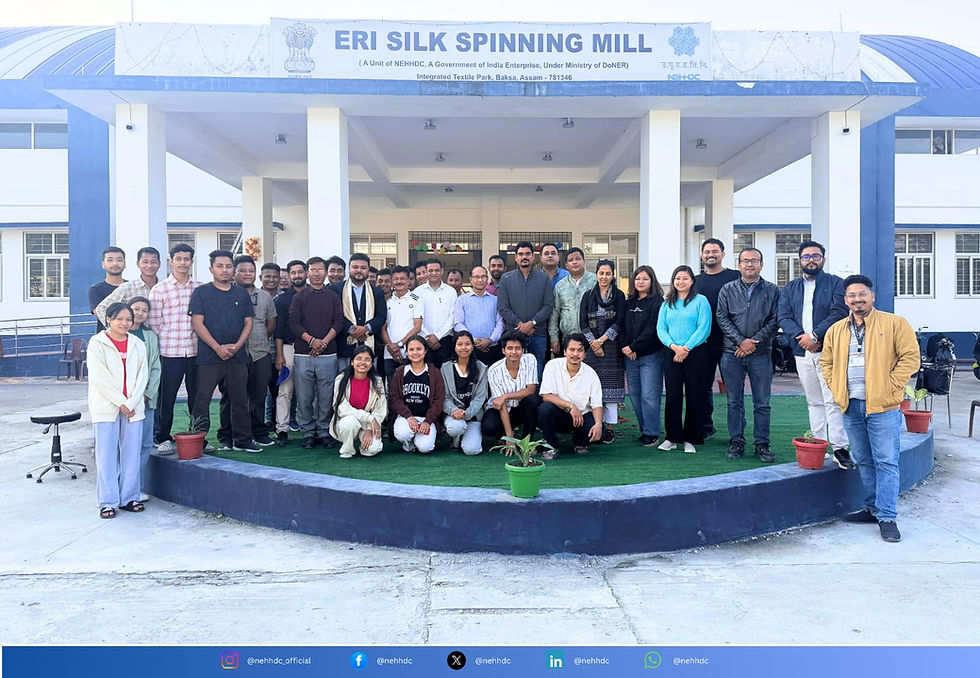
At the Eri Silk Spinning Mill, located in Baksa, Assam, the story of Eri is not just about fabric — it’s about people. Through state-of-the-art yet sustainable spinning technology and training programs, the mill supports:
Rural women and youth through skill-building and employment
The preservation of indigenous traditions of silk rearing and weaving
The global visibility of Northeast India’s cultural heritage
Every meter of Eri silk spun at our mill tells a story of dignity, respect for life, and craftsmanship.
The Global Rise of Eri Silk in Vegan and Sustainable Fashion
Designers and ethical fashion labels across the world are embracing Eri silk for its story, texture, and values. You’ll find Eri silk in:
Luxury vegan bridal collections
Zero-waste, slow fashion garments
Yoga and meditation apparel
Natural dyed scarves, stoles, and handbags
Sustainable interior furnishings
Even global celebrities and influencers advocating cruelty-free fashion are now recognizing Eri silk as a viable and elegant option.
Conclusion: Eri Silk Is Not Just a Fabric, It’s a Way of Life
In a world striving for authenticity, sustainability, and ethical action, Eri silk offers more than just softness — it offers peace of mind. As a rare textile that does not compromise on compassion, it is the perfect choice for those who want their wardrobes to reflect their values.
At the Eri Silk Spinning Mill, we are proud to produce one of the most ethical fabrics in the world, rooted in Indian heritage, designed for a global, conscious future.
If you believe fashion should be both beautiful and kind — Eri silk from Purbashree is the fabric for you.


Comments